

Helps clothes dry indoors
By continuously removing water vapour, the appliance helps limit the build-up of damp air around your washing.
ECOAIR BUYING GUIDES / GUIDE 03
Wet weather shouldn't mean damp clothes hanging around for days. Learn how a dehumidifier can help your washing dry indoors, what to look for and which EcoAir model suits your routine.
THE SHORT ANSWER
Every load of wet washing releases moisture into the room as it dries. A dehumidifier draws in that damp air and collects water in its tank, helping create conditions in which laundry can dry more effectively — without letting as much moisture linger on windows and walls.
Indoor washing can add moisture to your home. Dehumidification helps manage that moisture, but you should also maintain appropriate ventilation and address any separate damp or condensation problems.
Drying clothes indoors becomes easier when the air can take up moisture rather than staying damp.
By continuously removing water vapour, the appliance helps limit the build-up of damp air around your washing.
Less airborne moisture can help you manage condensation that might otherwise collect on cooler surfaces.
Ideal for wet, cold or unpredictable British weather, especially when washing needs to dry inside.
A suitable laundry mode, movable appliance and adjustable louvre make drying more convenient.
All three EcoAir models recommended in this guide use desiccant technology, making them strong options for cool-weather indoor laundry drying.
Desiccant technology uses a moisture-absorbing material rather than a refrigeration cooling circuit. It works particularly well in cooler rooms and normally releases air that feels warmer than the room air entering the appliance — a welcome by-product when you're drying washing in winter.
Warmer exhaust air may improve comfort, but a dehumidifier is not a substitute for a room heater and does not provide free heating.Desiccant performance is useful in the kind of lower indoor temperatures often experienced during UK winters.
The gently warmer airflow can help moisture leave fabrics while the unit collects moisture from the surrounding air.
Without a heavy refrigeration compressor, many desiccant units are easy to move to the room where the washing is drying.
These models use desiccant moisture removal rather than a gas-based refrigeration system. Electricity use still varies with the selected mode.
You don't need a dedicated laundry room. A suitable indoor space and a sensible setup can make a real difference.
Use an appropriate spin cycle for the fabric. Less water left in garments means less moisture needs to evaporate.
Spread garments across a drying rack rather than bunching them together. Air needs to circulate around the fabric.
Use a room of suitable size, avoid unnecessary damp air entering from other areas and maintain appropriate ventilation. Do not use an airtight or inadequately ventilated space.
Place it upright on a stable surface, with the clearances required by its manual. Do not hang clothes over the unit or obstruct air inlets and outlets.
Select your model's laundry setting for focused drying, follow its operating instructions and return to an everyday humidity mode when the washing is dry.
Drying time is not fixed. Fabric thickness, load size, spinning, airflow, room temperature and starting humidity all affect how quickly items become dry.
A higher daily litre rating can be useful, but everyday features matter just as much.
Designed for focused moisture removal when wet washing is adding extra humidity to the room.
Helps circulate air around the space. Always keep the appliance a safe distance from garments.
Useful when returning to everyday use after drying, so the machine can respond to changes in room humidity.
A bigger tank can mean fewer trips to empty it. Tank capacity is different from the maximum extraction rating.
Consider how easily you can move the machine, the area being treated and how frequently you do laundry.
Faster laundry modes can be louder and use more power. Compare the settings you're actually likely to use.
Pair good laundry habits with the right dehumidifier setting.
Hang clothes with gaps between them, use the relevant laundry setting and clean your appliance filter as directed.
Cover the unit with washing, push the drying rack against the air outlet or leave laundry mode running unnecessarily.
Return to normal humidity control once drying is finished. Follow the care labels on garments and the EcoAir product manual.
A 7.5L/day rating describes water removal under specified test conditions over 24 hours, not the size of the tank. Real-world removal varies with temperature and humidity. A 2L tank, for example, simply holds up to 2 litres before it needs emptying.
Choose the description closest to your home for a helpful starting recommendation.
All three are desiccant dehumidifiers with dedicated laundry modes. Pick the one that fits your room, washing routine and preferred features.
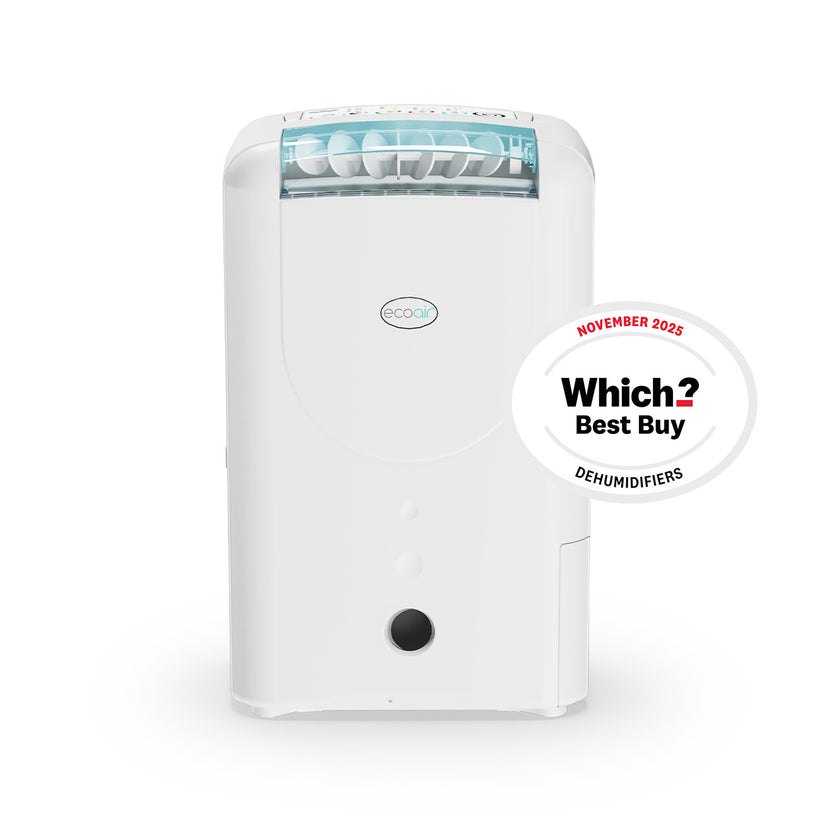
A well-rounded choice for regular washing, with laundry mode, E7 humidity management, turbo operation and adjustable airflow.
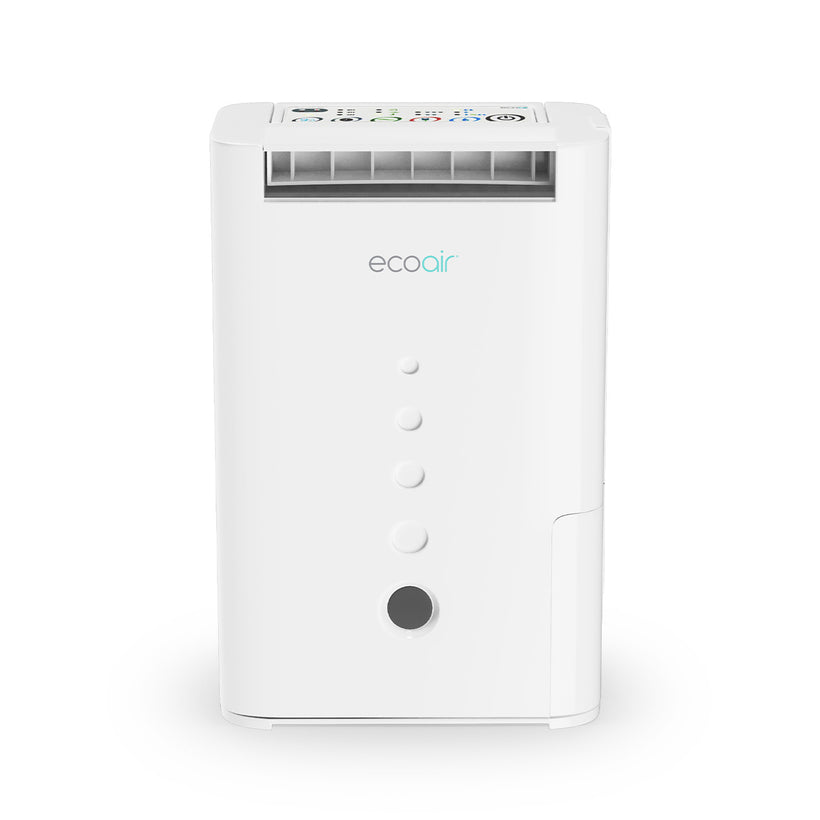
A versatile alternative with adjustable louvre, laundry modes, E7 control and a lightweight body for moving between rooms.
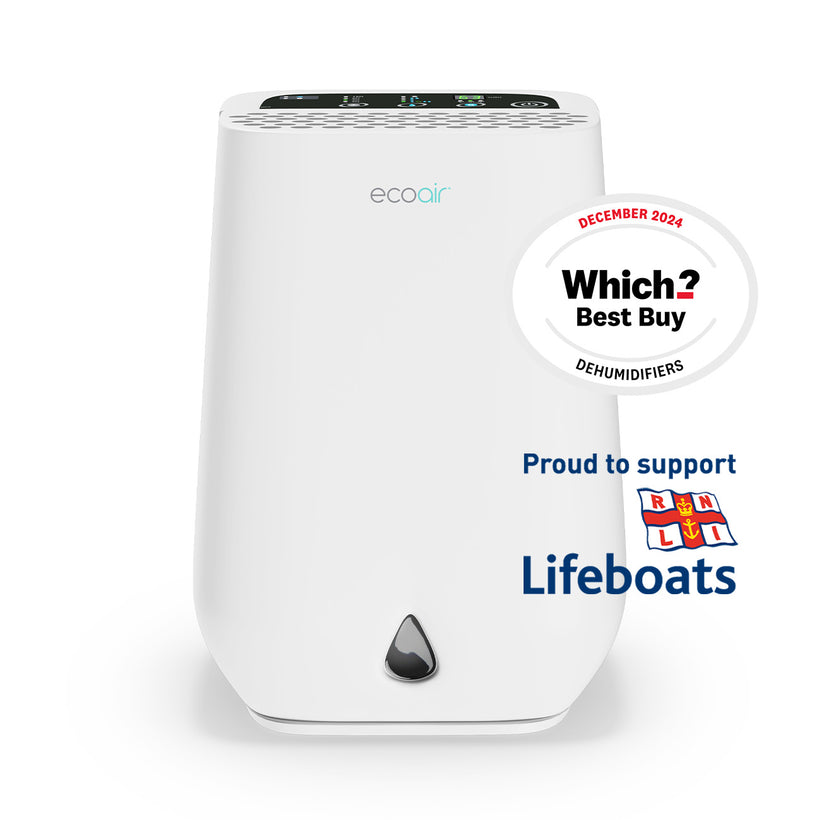
Higher extraction capacity, a generous tank, full-power laundry mode and E7S humidity control for more demanding routines.
Extraction ratings are measured at 20°C and 60% relative humidity. Real moisture removal and drying times vary with room conditions, fabric, airflow and settings. Product prices and availability may change.
| Feature | DD1 Classic MK6 | DD128 | DD3 Classic MK3 |
|---|---|---|---|
| Technology | Desiccant | Desiccant | Desiccant |
| Moisture extraction | 7.5 L/day | 8 L/day | 11 L/day |
| Laundry mode | Yes | Yes | Yes |
| Water tank | 2 litres | 2.2 litres | 4.2 litres |
| Suggested coverage | Up to 60 m² | Up to 66 m² | Up to 90 m² |
| Net weight | 6 kg | 6.1 kg | 7.5 kg |
| Best starting point for | Everyday loads | Flexible airflow | Frequent / larger loads |
Useful things to know before drying your next load indoors.
Yes. As clothes dry they release moisture into the air. A dehumidifier removes some of that moisture, helping prevent the room air from becoming persistently damp. Actual drying time depends on fabric, airflow, temperature and load size.
Often, especially in cool rooms. Desiccant models continue to remove moisture usefully in cooler conditions and release slightly warmer air as part of their normal operation.
Use a drying rack with space for air to circulate, but never block the appliance's air inlet or outlet. Keep the distances stated in your model's manual and don't drape garments over the unit.
There is no guaranteed time. Well-spun light items may dry relatively quickly, whereas jeans, towels and densely packed loads take longer. EcoAir model manuals explain the intended laundry settings and safe operation.
Laundry mode is intended for periods of increased moisture load. Follow your appliance's manual, avoid unnecessary prolonged operation and return to an ordinary humidity-control setting when the laundry is dry.
No. A bigger tank reduces how often you may need to empty it. Extraction capacity and the room's conditions determine moisture-removal performance.
No. Dehumidification helps control moisture, but appropriate ventilation remains important for indoor air quality and for dealing with moisture sources such as cooking and bathing.
Explore our dehumidifiers or contact the EcoAir team for help selecting the right model for your home.